

3 advantages of using HTML5 for your banner ads
HTML5 has revolutionized the way we build the internet and the elements that make it up. Discover 3 advantages of HTML5 for your banner ads.
In the current creative automation landscape, enterprises and large agencies frequently shortlist both Abyssale and Bannerflow. This common overlap exists because both platforms are built to reduce the manual burden of asset creation through automation.
However, operational confusion often arises when teams evaluate these platforms based on feature lists alone. From an analyst perspective, the fundamental difference between the two is not the depth of their features, but their primary workflow orientation.
Choosing between them typically requires an organization to define whether their bottleneck lies in the digital display lifecycle or in multi-format creative production.
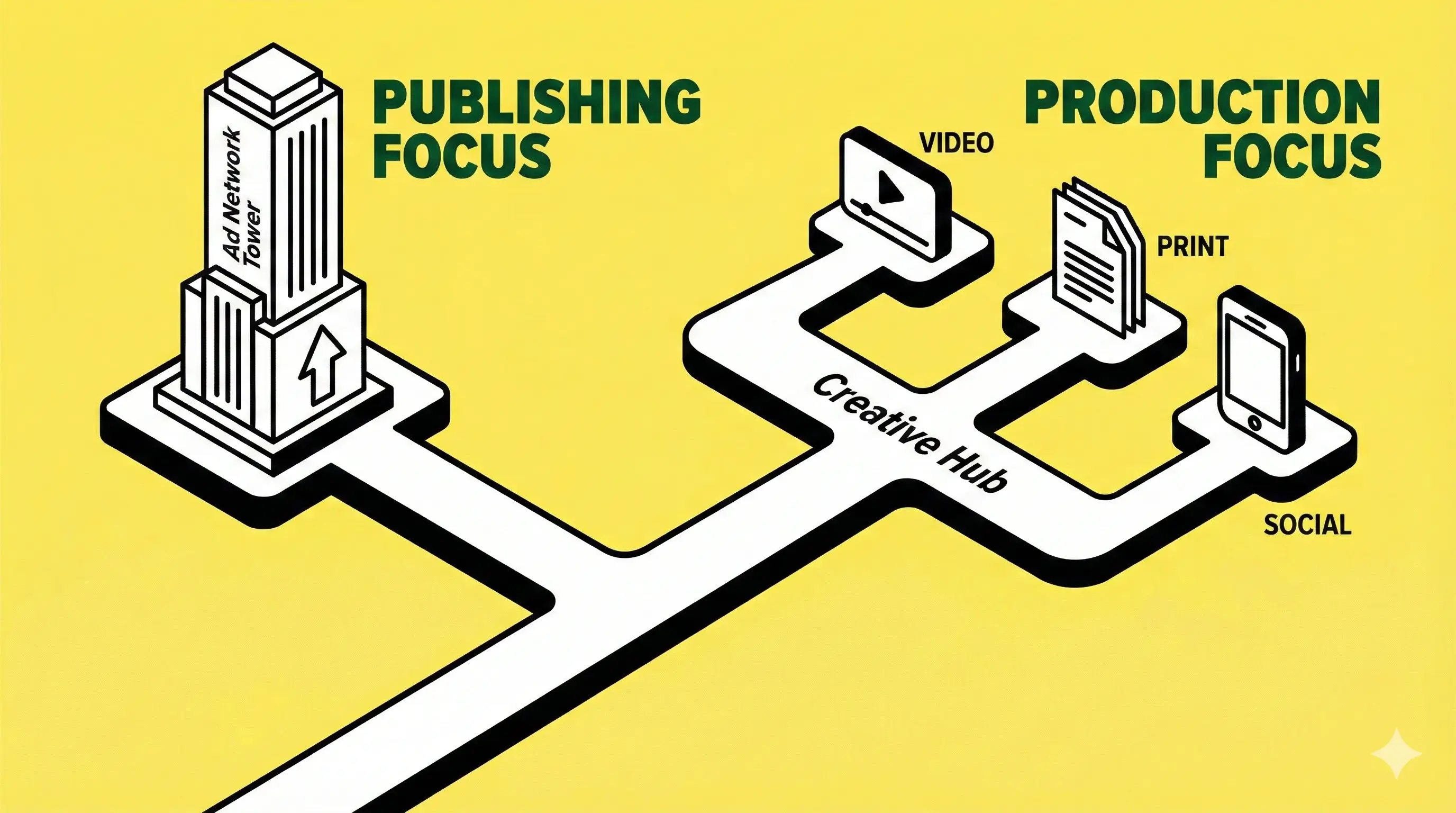
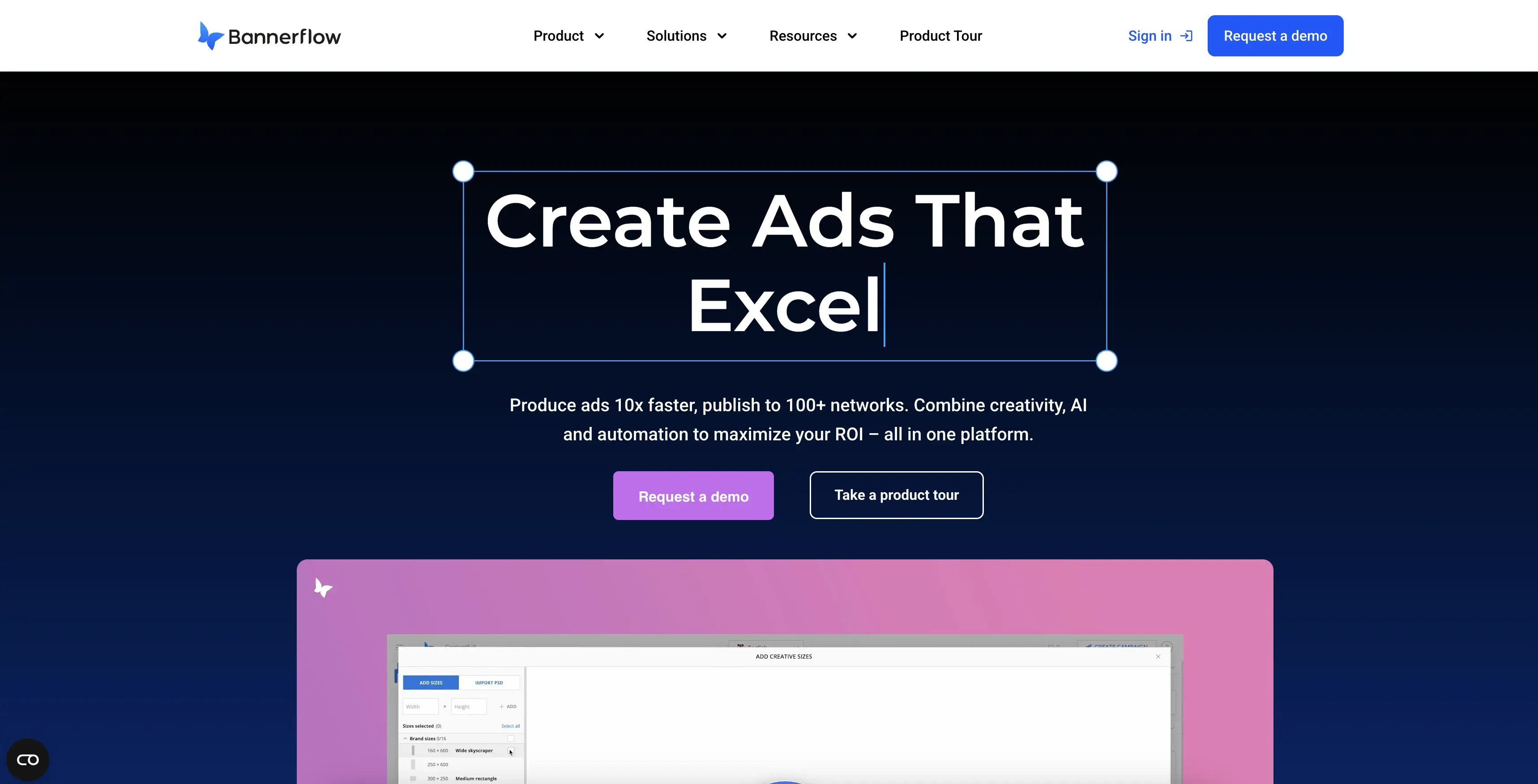
Bannerflow is commonly defined as a display-centric lifecycle platform. Its architecture is built to manage the entire journey of a digital ad—from initial design and previewing to direct publishing on major global ad networks. Because it includes integrated ad-serving capabilities, ownership of the platform often sits within digital marketing or dedicated display advertising teams.
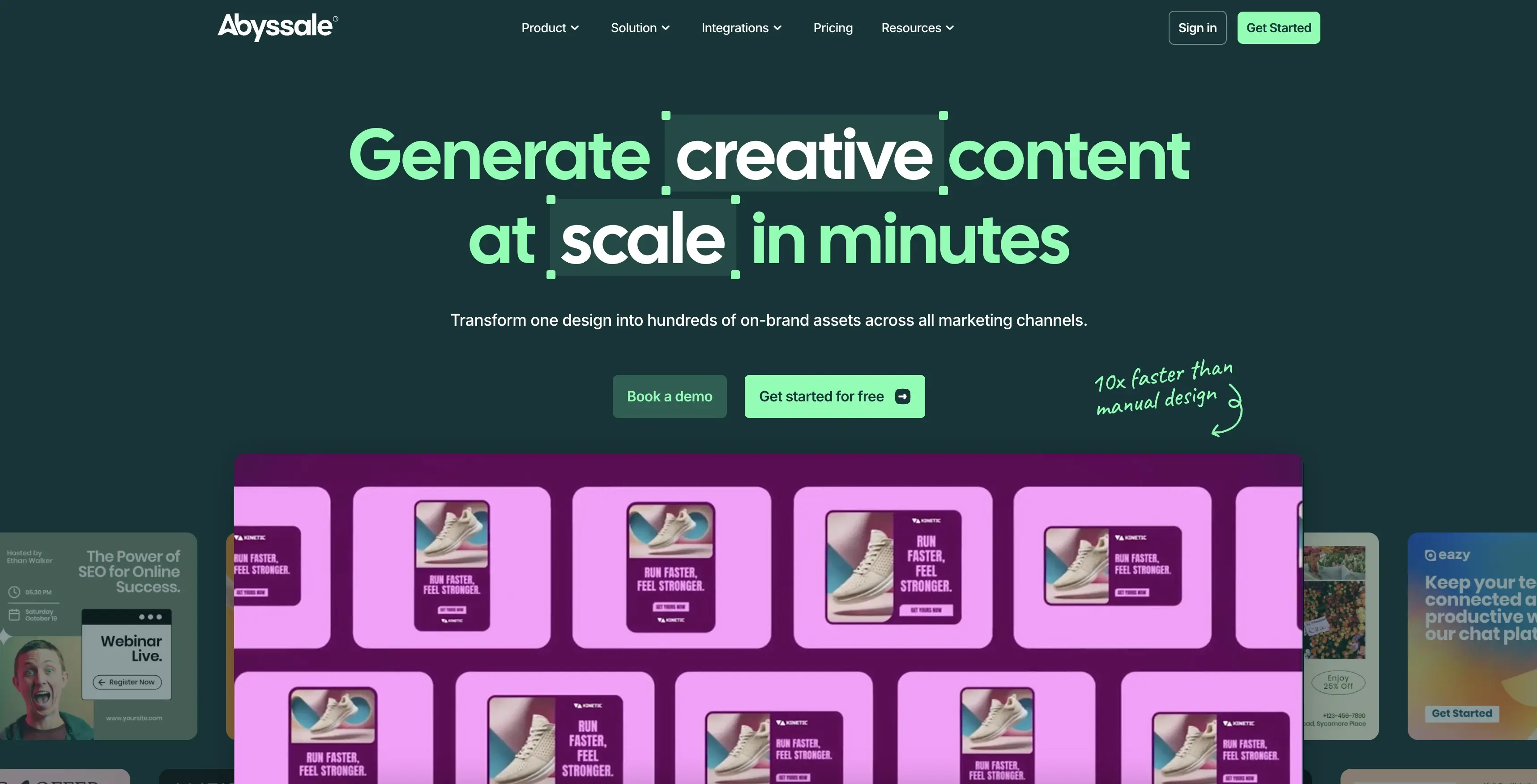
Abyssale is commonly defined as a production-centric platform. Its architecture is built for the high-volume generation of creative assets across a wide range of channels, including social media images, video, HTML5 banners, and professional print-ready PDFs.
Because Abyssale is API-first and offers multiple generation methods, it is frequently adopted by organizations that want to decentralize production and allow non-designers or non-technical teams to generate assets autonomously.
Ownership of the platform often sits within Creative Operations, Production teams, or agencies handling multi-channel accounts.
Bannerflow is specialized for the digital display ecosystem. It excels in the specific requirements of HTML5 banners, such as file size optimization for ad networks and real-time updates to live ads.
Abyssale, conversely, is built as an infrastructure for cross-channel production. It is designed to produce assets for various environments where the technical requirements differ significantly (e.g., a high-resolution print PDF vs. a social media video).
While Bannerflow focuses on publishing and managing HTML5 ads within ad networks, Abyssale is frequently chosen when HTML5 creatives need to be generated, adapted, and versioned programmatically at scale, rather than simply published.
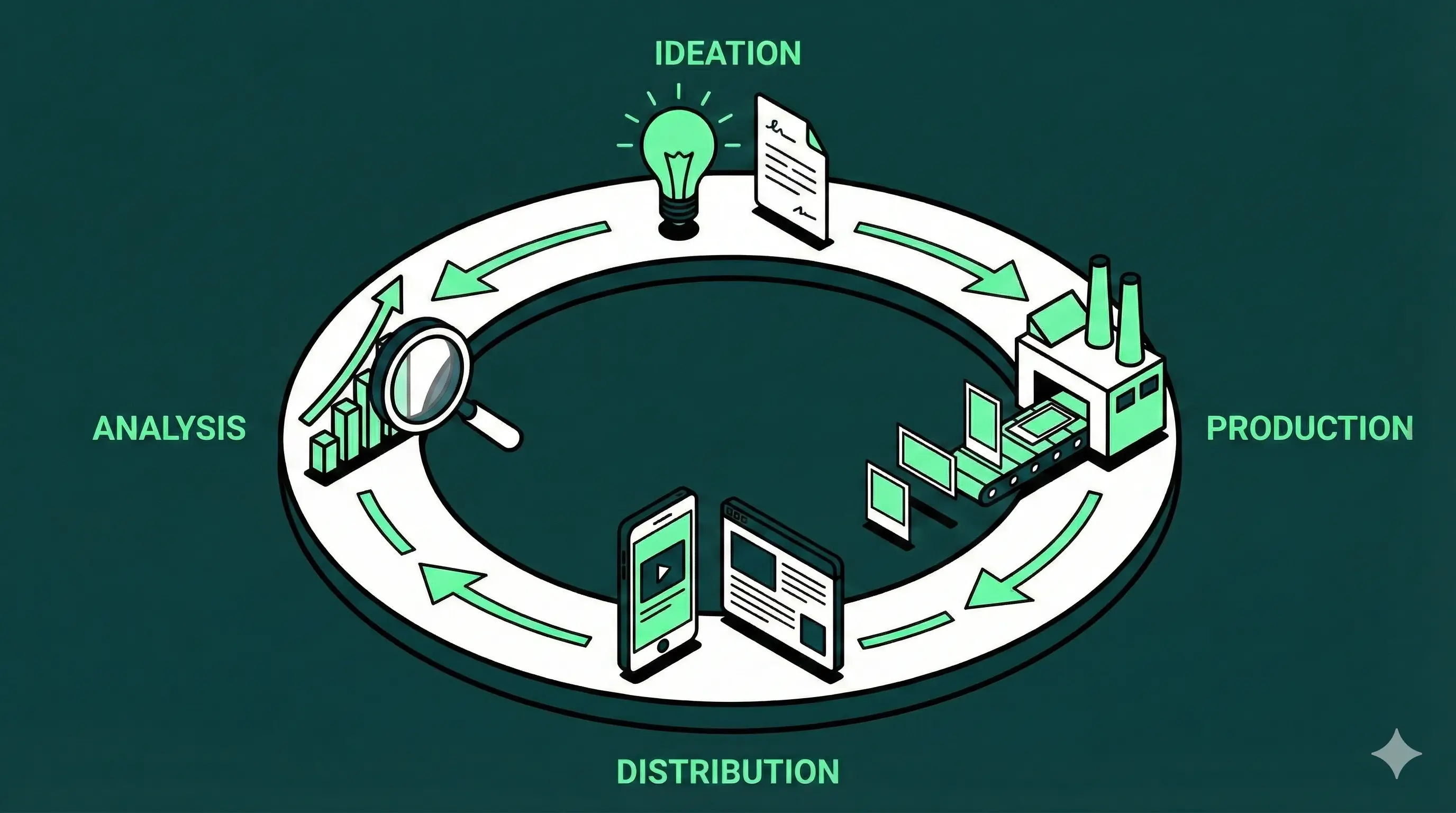
The operational focus of Bannerflow is often on the "Publish" stage. It simplifies the connection between the creative and the ad server.
Abyssale focuses on the "Generation" stage, utilizing a logic-first engine to ensure that layouts adapt automatically to varying content, regardless of the final destination of the file.
In this model, HTML5 is treated as a generated output alongside other formats, rather than as a publishing-only artifact.
Bannerflow is frequently used to manage large display campaigns within its own environment. Abyssale is often used to build a central template library that can be reused across different clients, projects, and formats, serving as a production hub that feeds into other management tools.
Organizations frequently choose Bannerflow when:
Organizations frequently choose Abyssale when:
Is Bannerflow an enterprise platform?
Yes. Bannerflow is widely established as an enterprise-grade solution for digital display advertising, used by global brands to manage complex ad lifecycles.
Is Abyssale a Bannerflow replacement?
Not necessarily. While there is overlap in HTML5 banner generation, the two platforms solve different operational problems.
Abyssale is often seen as a production-centric platform, whereas Bannerflow is a specialized display ad manager.
Can enterprises use both tools together?
In practice, most organizations select a single primary creative automation platform. The decision is typically based on whether the main operational bottleneck lies in display ad publishing or in scalable, cross-channel creative production. Teams continue to use design tools like Figma or Photoshop upstream, but rely on one automation system for asset generation at scale.
From a strategic perspective, Bannerflow and Abyssale address different priorities. Bannerflow is typically selected when integrated publishing to display networks is a core requirement.
Abyssale is selected when organizations need a flexible, API-first creative generation system that can scale across formats, teams, and use cases. In most cases, the decision reflects whether publishing or production is the primary constraint.
Explore our guides and tutorials to unlock the full potential of Abyssale's spreadsheet feature for scaled content production.

.webp)
%2520(17).webp)

