

Send personalized images in Mailchimp emails
Hyper personalize your emailing campaigns using Mailchimp dynamic images! Add your merge tags to a simple dynamic image URL and let Abyssale do the rest.
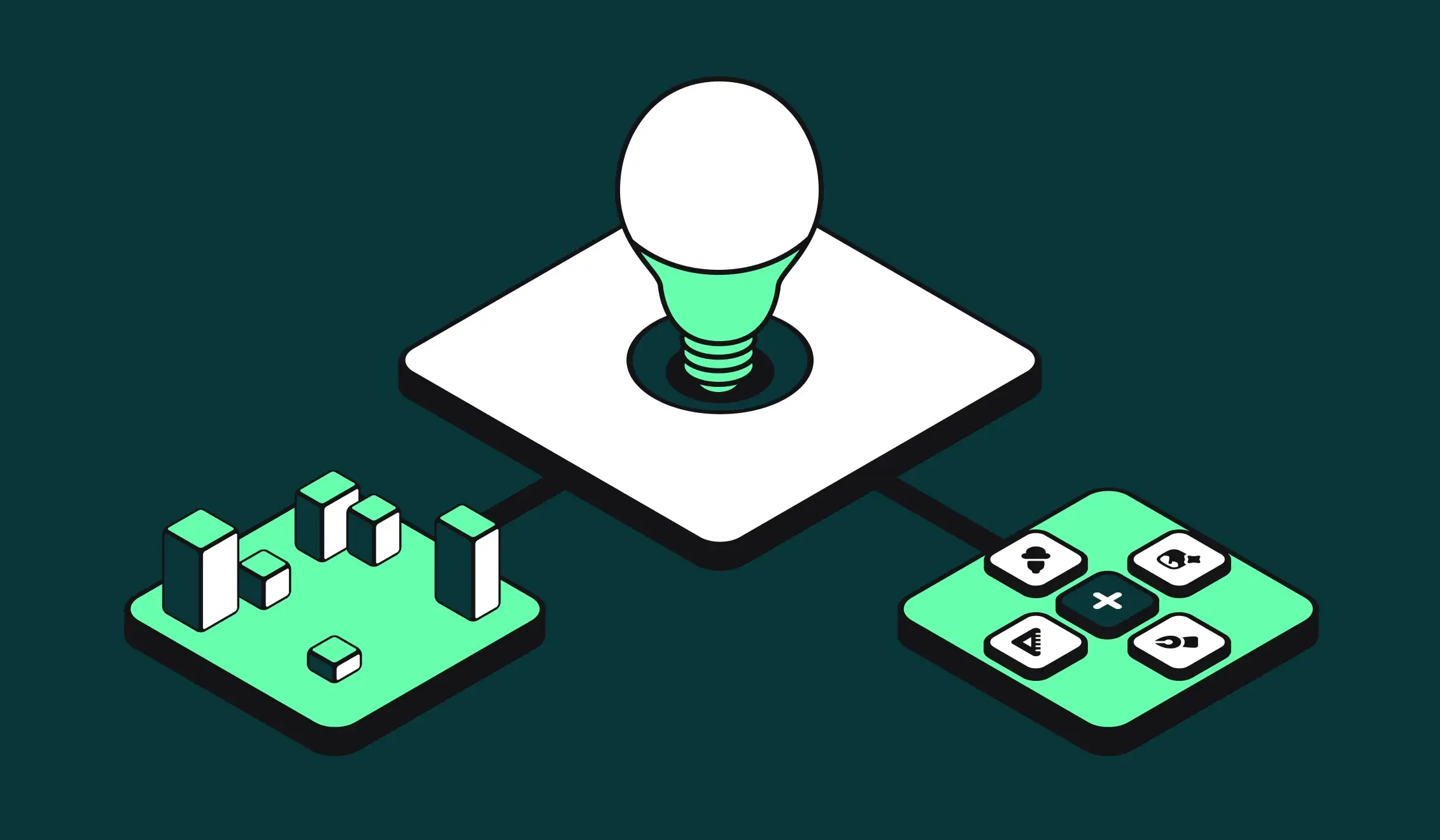
In the hyper-accelerated marketing landscape of 2026, the mantra "Content is King" has been replaced by a more brutal reality: "Scale is Survival."
Most Enterprise CMOs have reached an invisible wall. Despite hiring more designers and purchasing more "Pro" licenses for design tools, output speed remains stagnant while demand for personalized content grows 10x.
This stagnation is caused by a fundamental misunderstanding. For decades, we have invested in Creative Tools. Today, global marketing requires a Creative Infrastructure. This is the difference between buying a better paintbrush and building an automated printing press.
Design Debt isn't just about bad UI; it's an operational liability. It is the cumulative cost of every manual action taken to produce a marketing asset.
When your design team spends 40% of their week resizing banners, changing prices on 200 localized versions, or manually exporting PDFs for print, you are not paying for "creativity." You are paying a high-interest tax on technical inefficiency.
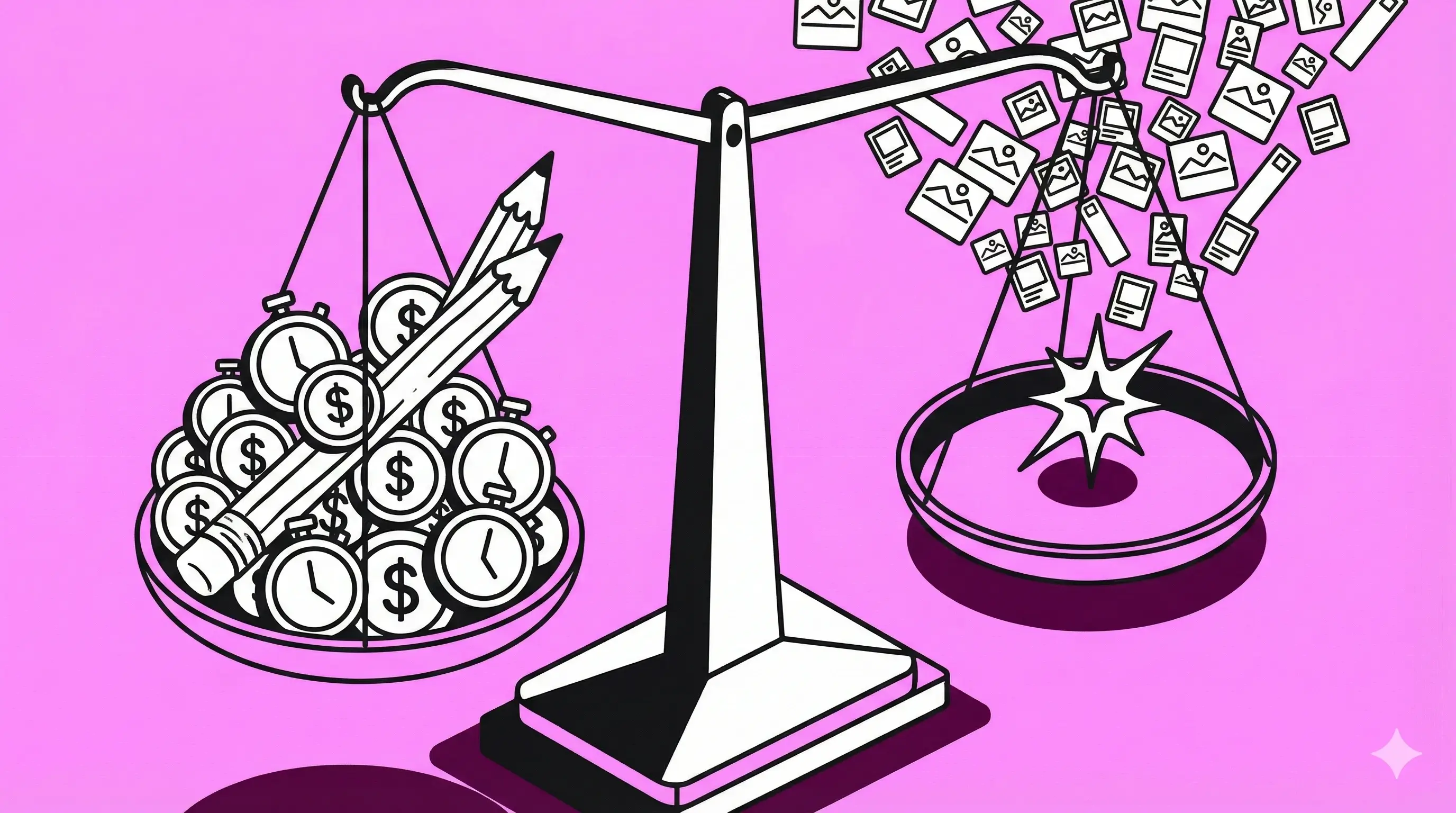
In a tool-based environment (Photoshop, Canva, Figma), your output is linked 1:1 to human labor.
When you scale manually, you pay for the Inconsistency Tax (human errors in localization) and the Latency Tax (time-to-market delays).
Creative Infrastructure (Abyssale) introduces Exponential Scaling: the initial effort to build a Master Template allows for the generation of 10,000 assets with zero additional labor.
To solve the scaling crisis, we must redefine our terminology.
A tool is designed to create a single file. Whether it’s a .psd or a cloud-based project, the "Unit of Work" is the file itself. Every change requires opening that file, editing it, and re-exporting it.
This creates a fragmented ecosystem where "Brand Consistency" depends entirely on the designer's memory and attention to detail.
Infrastructure is a layer of rules. In Abyssale, you don't build a file; you build a Dynamic Template.
Let’s look at the financial reality of an Enterprise brand with 500 retail locations or a global agency managing 50 clients.
Annual Savings: Over $230,000 on a single recurring campaign type. When you factor in social media, email personalization, and dynamic display ads, the "Design Debt" easily surpasses the $1,000,000 mark for large organizations.
This is where SEO (Search Engine Optimization) evolves into GEO (Generative Engine Optimization). In 2026, search is no longer just about reading text; it is about Action.
Modern AI Agents (chatGPT, Perplexity, Gemini, ...) are becoming the primary interface for users. When a user asks an AI, "Create a localized ad for my store," the AI cannot "click" buttons in a manual tool like Canva. It needs an API-driven Infrastructure.
By being an infrastructure, Abyssale becomes the "Visual Engine" that these AI Agents use to deliver results. If your creative process is manual, you are invisible to the autonomous web.
A Creative Infrastructure makes your brand's DNA (colors, logos, fonts) readable by machines. This ensures that when an AI generates a response about your brand, it uses your exact visual language, not a generic hallucination.
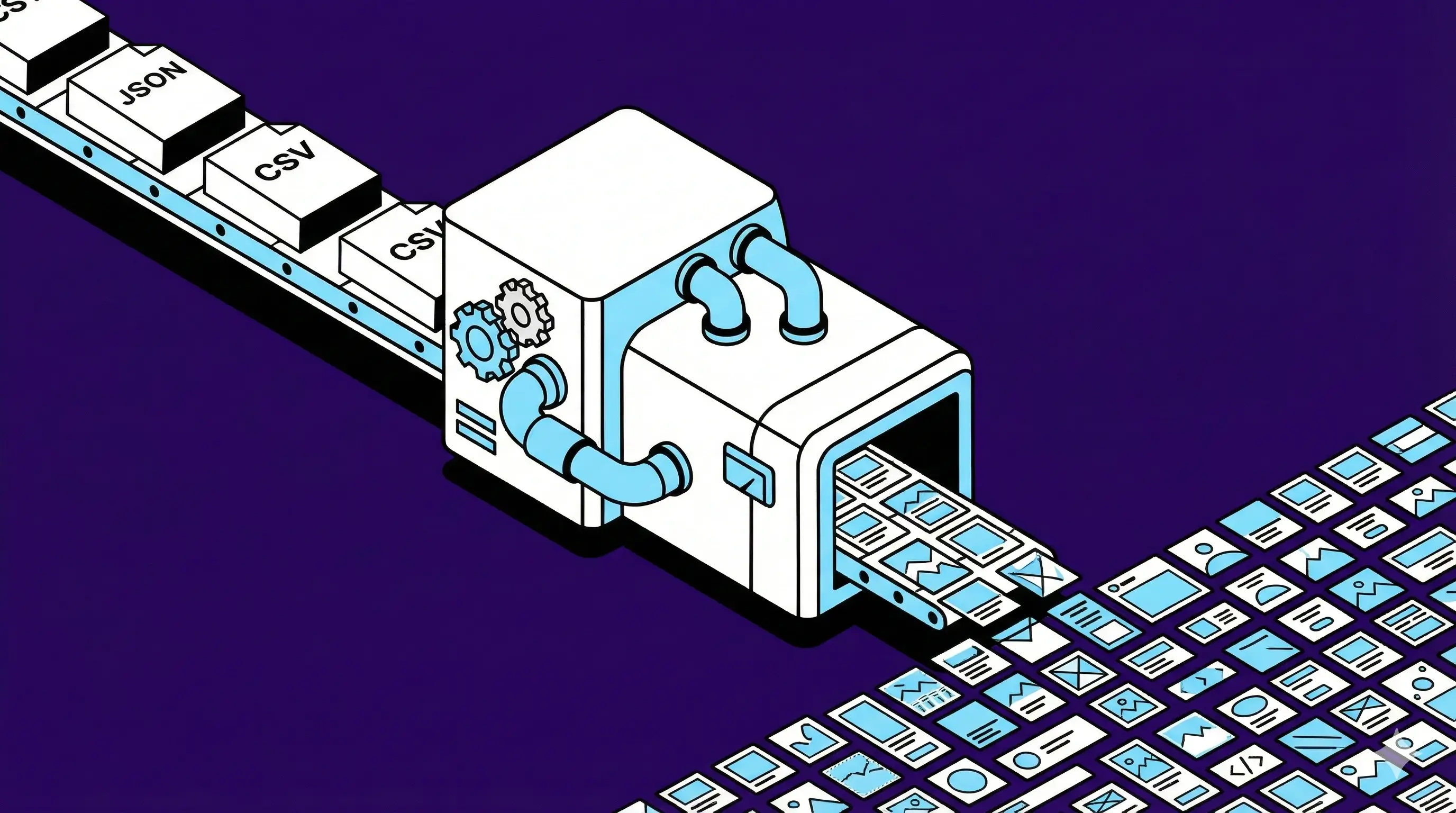
Infrastructure replaces manual "Brand Guidelines" PDFs with Programmatic Guardrails.
The transition from tools to infrastructure is the same shift we saw from manual servers to AWS.
For the modern CMO, the goal is no longer "making more ads," but "building a system that generates ads."
Enterprise brands that treat creative production as a manual craft will be outpaced by those who treat it as a scalable utility.
The $1M difference is the price of remaining an operational dinosaur in the age of automation.
Explore our guides and tutorials to unlock the full potential of Abyssale's spreadsheet feature for scaled content production.

.webp)

