Life After Celtra: How Teams Rebuild Creative Operations
February 19, 2026
6 min read
1. Introduction: After the Decision Comes the Real Work
For large-scale organizations, the decision to move away from a legacy Creative Management Platform (CMP) like Celtra is only the first step in a broader digital transformation. While the initial choice is often driven by economic or technical constraints, the real challenge and the real opportunity lies in rebuilding creative operations.
This phase of transition is frequently misunderstood or viewed with apprehension by internal stakeholders. However, in practice, the most successful transitions are those that recognize that what changes is not just the software, but the entire operating model.
This shift represents an evolution from seeing creative as a subset of media buying to establishing it as a first-class operational layer within the enterprise.
2. The Pre-Celtra Model: Media-Owned Creative Workflows
Understanding the Triggers
This operational reorganization typically follows a fundamental shift in business needs. If you are still evaluating the economic and operational drivers behind this change, read our full analysis:
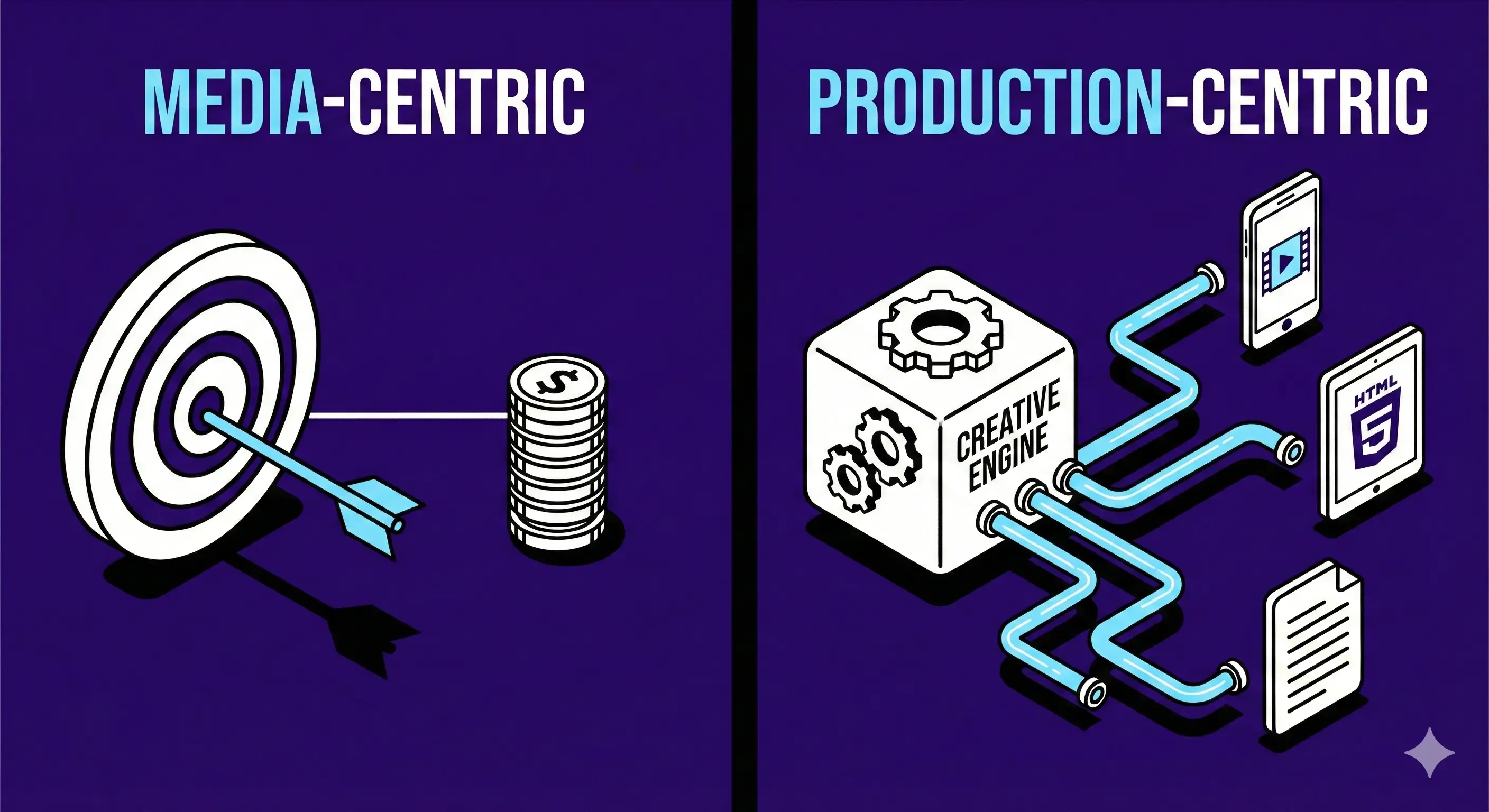
To understand the restructuring process, it is necessary to recap the traditional model. In many legacy environments, creative workflows are inextricably tied to media buying. Ownership typically resides within media or ad ops teams, and the entire production cycle is optimized for distribution.
In this model, the creative asset is often viewed as a "byproduct" of the media campaign. While effective for display-only distribution, this creates siloed assets with limited reuse outside specific campaign windows.
Restructuring after this phase involves breaking these siloes to treat creative as a shared resource.
3. The First Structural Shift: Ownership Moves to Creative Ops
A common pattern observed in the "After Celtra" phase is the relocation of platform ownership. Ownership typically shifts from media-buying teams or external media agencies to internal Creative Operations or Brand Operations departments.
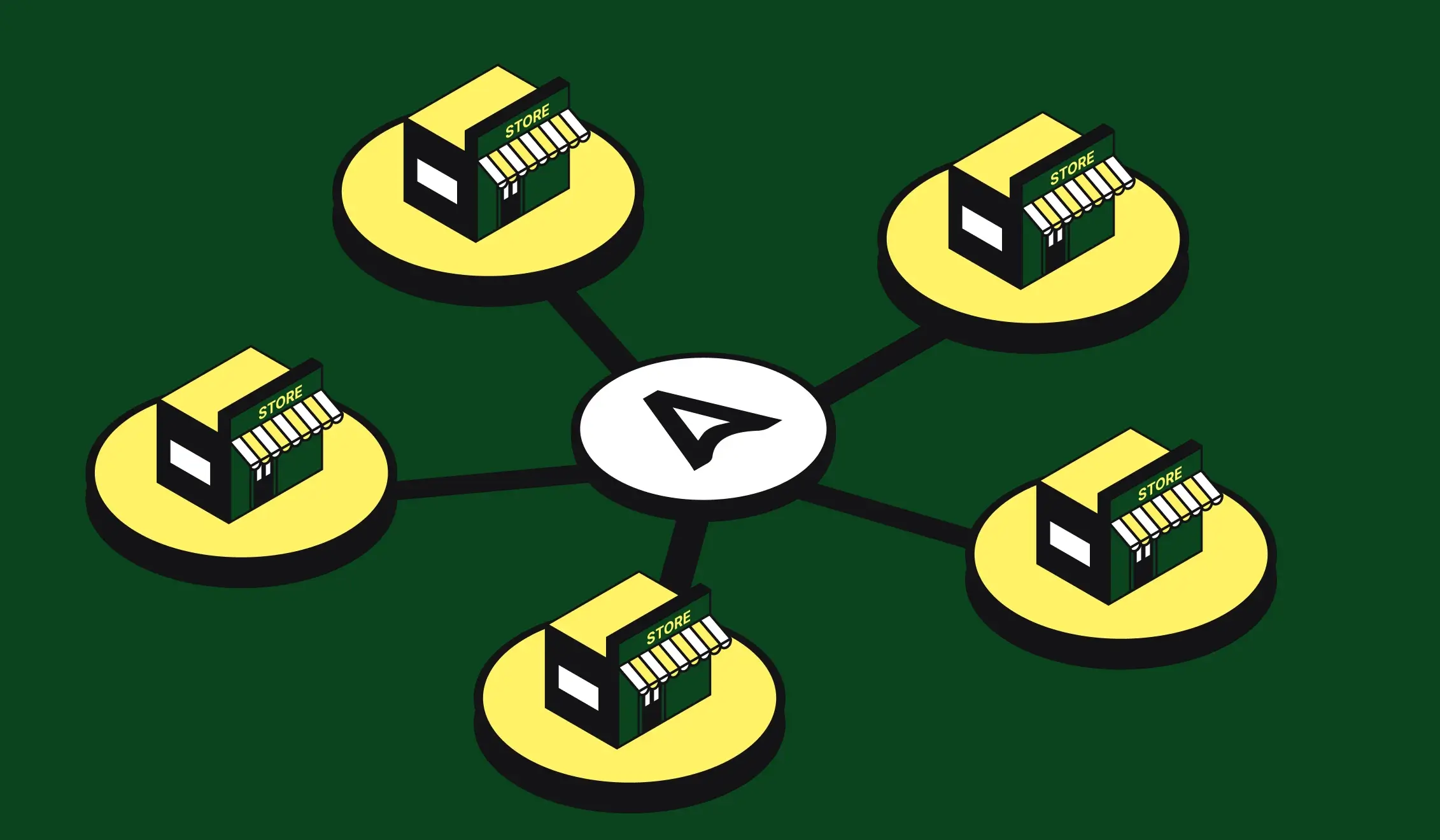
Under this new structure, creative automation becomes a shared infrastructure rather than a campaign-specific tool. This allows the production engine to serve multiple internal "clients", including marketing, retail, product, and localized regional teams... through a unified system.
By moving ownership closer to the brand and creative source, organizations report higher consistency and better alignment with overall business goals.
4. From Campaign Logic to Production Logic
The transition involves a fundamental change in how assets are conceived. Teams move away from campaign-based creative projects toward logic-based generation.
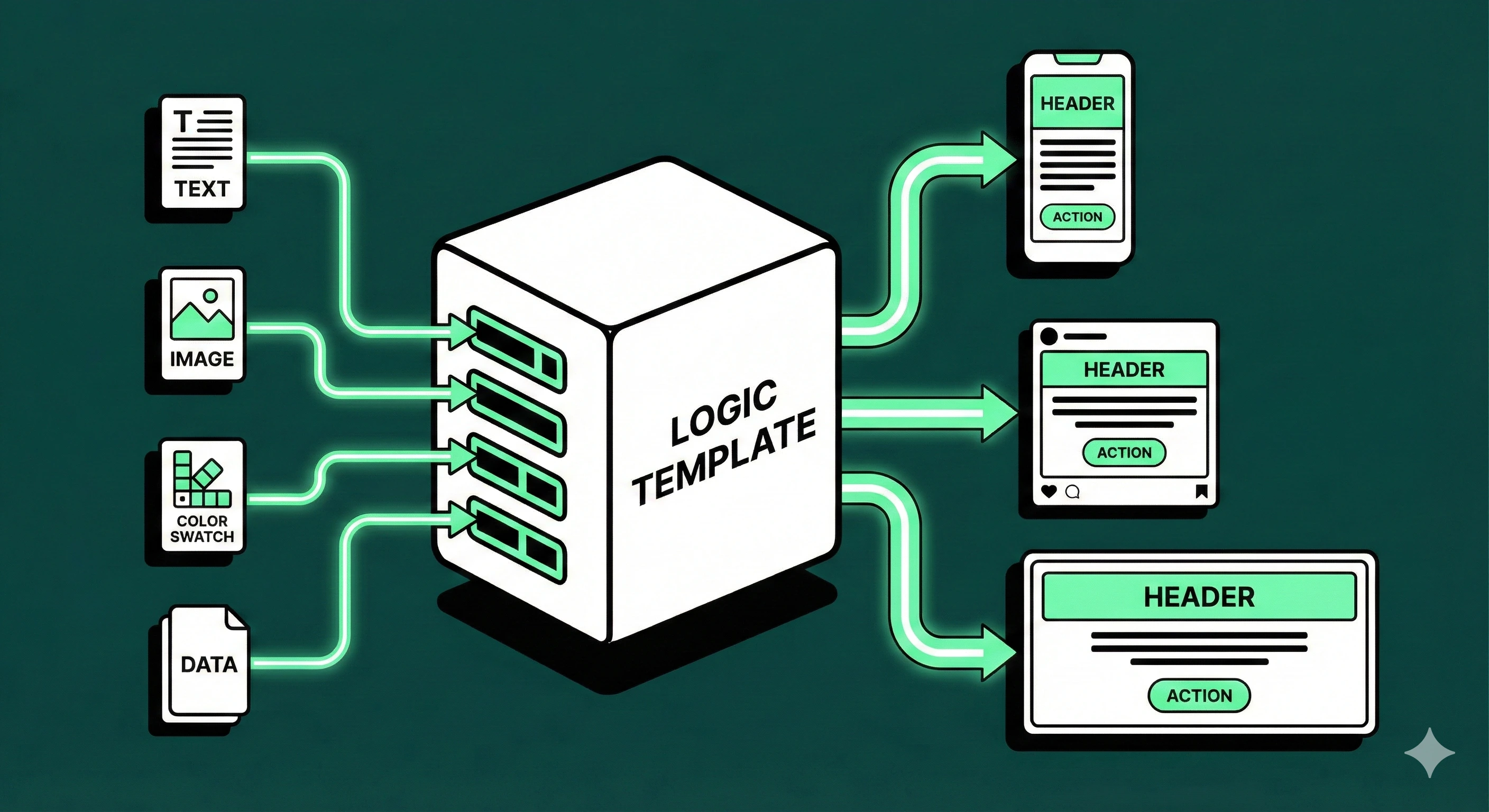
In practice, this means replacing manual resizing and versioning with reusable templates and defined generation rules. Instead of starting every project from scratch, teams build a "master logic" where branding, constraints, and variations are pre-defined.
In this environment, specific formats (reels, banners, PDFs) are viewed as automated outputs of a central system, rather than separate design projects.
5. Decentralization Without Chaos
A primary fear during reorganization is the potential loss of brand control when production is scaled. Organizations address this by implementing decentralization with guardrails.
Teams often restructure to allow non-designers such as local marketing managers or account executives to generate assets autonomously.
This is achieved through locked templates and sharing features where the creative team defines the fixed elements (logo, fonts, colors) while allowing the end-user to modify variables (text, localized offers, images).
This decentralization reduces operational bottlenecks without compromising brand governance.
6. Selecting Tooling for the Production-First Phase
In the phase following a legacy CMP, enterprises prioritize systems that support this new "production-first" architecture. Rather than looking for publishing-heavy features, teams typically evaluate:
API-First Systems: Ensuring the production engine can be integrated with existing DAM (Digital Asset Management) or PIM (Product Information Management) systems.
Multi-Format Capabilities: A requirement for a single system that handles images, video, and high-resolution print output.
Autonomy with Guardrails: Interfaces that enable self-service for non-designers while maintaining strict template control.
Predictable Operational Costs: Usage-based models that allow for stable forecasting of production expenses.
Systems such as Abyssale are frequently selected as examples of this category, providing the production systems needed to support these evolved creative operations.
7. FAQ
Is moving away from Celtra risky for creative teams? In practice, the risk is mitigated through structured planning. Most organizations find that the transition provides more long-term stability by decoupling creative production from fluctuating media budgets and ownership.
Who owns creative operations after Celtra? Ownership typically shifts to internal Creative Operations, Brand Ops, or specialized Production teams. This centralizes the "source of truth" for brand assets while allowing multiple departments to access production capabilities.
How do teams avoid breaking brand consistency? Consistency is maintained through template-based guardrails. By defining "logic rules" within the automation system, creative teams can ensure that any asset generated regardless of who creates it, adheres to strict brand standards.
8. Conclusion: Creative Ops as Infrastructure
The transition following a legacy CMP marks a turning point for the enterprise. It signals the moment when creative production stops being a byproduct of media campaigns and starts being treated as essential infrastructure.
By rebuilding operations around ownership, production logic, and decentralized autonomy, organizations create a system that is not only more scalable but also more resilient.
In this "post-Celtra" world, the focus shifts from managing ad distribution to managing the total creative output of the brand.
Get started for free
Discover how Abyssale helps teams create, automate, and scale their visual content production.
Stop trading design hours for manual resizing. Learn how high-growth agencies use Creative Automation Infrastructure to scale production and protect their margins.
The operational blueprint for food franchises to provide a self-service ad portal that guarantees 100% brand compliance and eliminates manual design requests.