Scaling Creative Production: Best Banner Tools for Growing Agencies (2026)
A guide for agencies scaling their creative production. Compare tools like Abyssale, Creatopy, and Bannerflow to manage high-volume client demands efficiently.
In 2026, advertising agencies face a fundamental structural challenge: the "operational bottleneck." As brand requirements for hyper-personalization grow, the volume of creative variations required per campaign has increased significantly. For most firms, this has led to a direct correlation between campaign complexity and operational overhead.
Profitability is increasingly constrained by the labor-intensive nature of manual resizing, localization, and quality assurance (QA). Consequently, the decision to adopt creative automation is no longer viewed as a tactical design choice, but as a core economic strategy intended to protect margins and decouple revenue from headcount growth.

The market for creative automation has matured into a set of specialized platforms, each catering to distinct operational models. Agencies typically evaluate four primary solutions based on their client mix and media focus:
The long-term ROI of an automation platform is often dictated more by its billing philosophy than its feature set. Agencies generally encounter two primary economic models:
Platforms like Celtra and Bannerflow often utilize pricing structures linked to ad impressions or media spend.
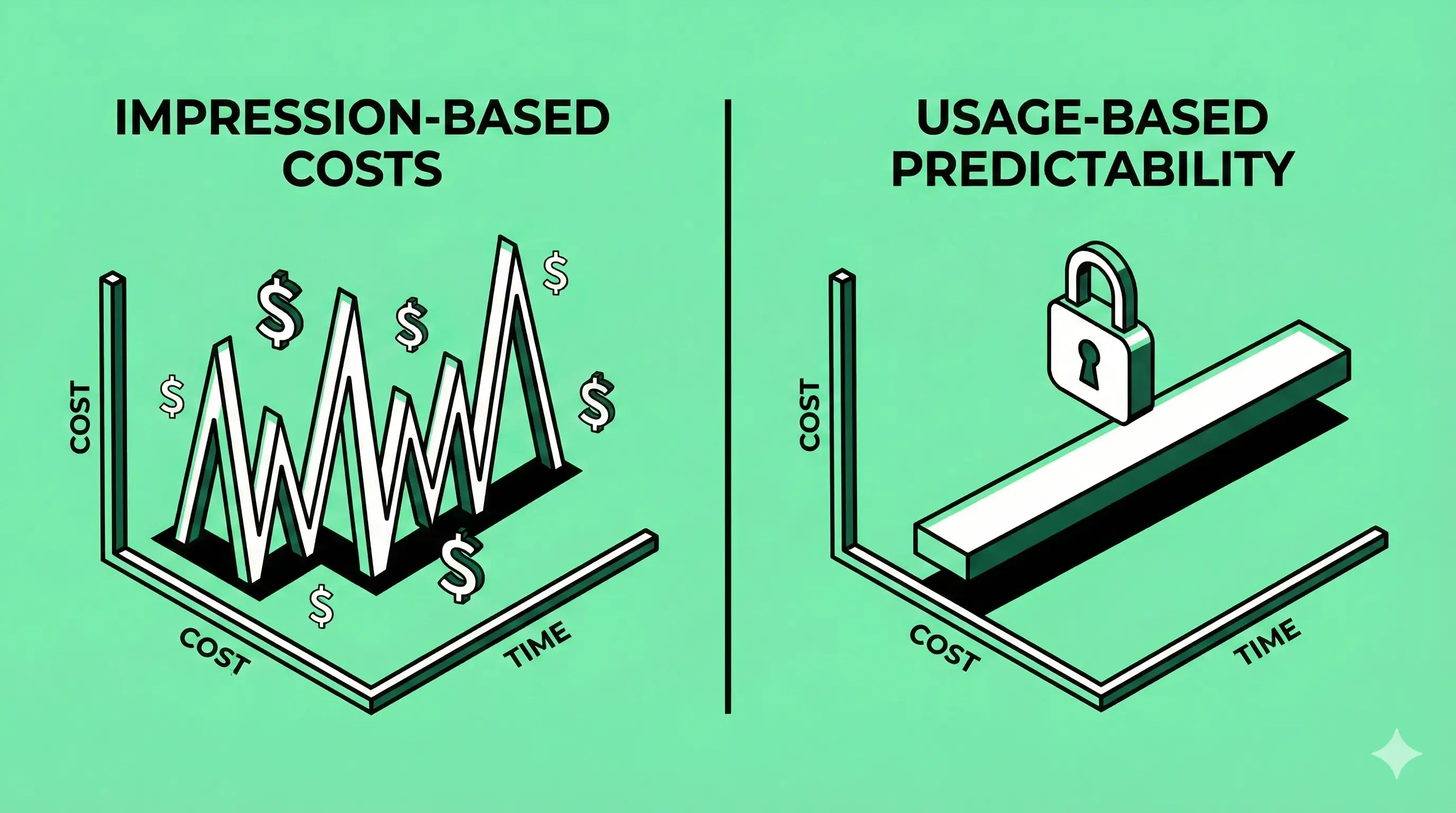
Infrastructure-focused platforms like Abyssale typically employ usage-based pricing, often based on monthly credits or the volume of unique assets generated.
The primary economic lever in creative automation is the reduction of repetitive labor. Manual production involves significant costs in "pixel-pushing" the act of manually adjusting layouts for different sizes or languages.
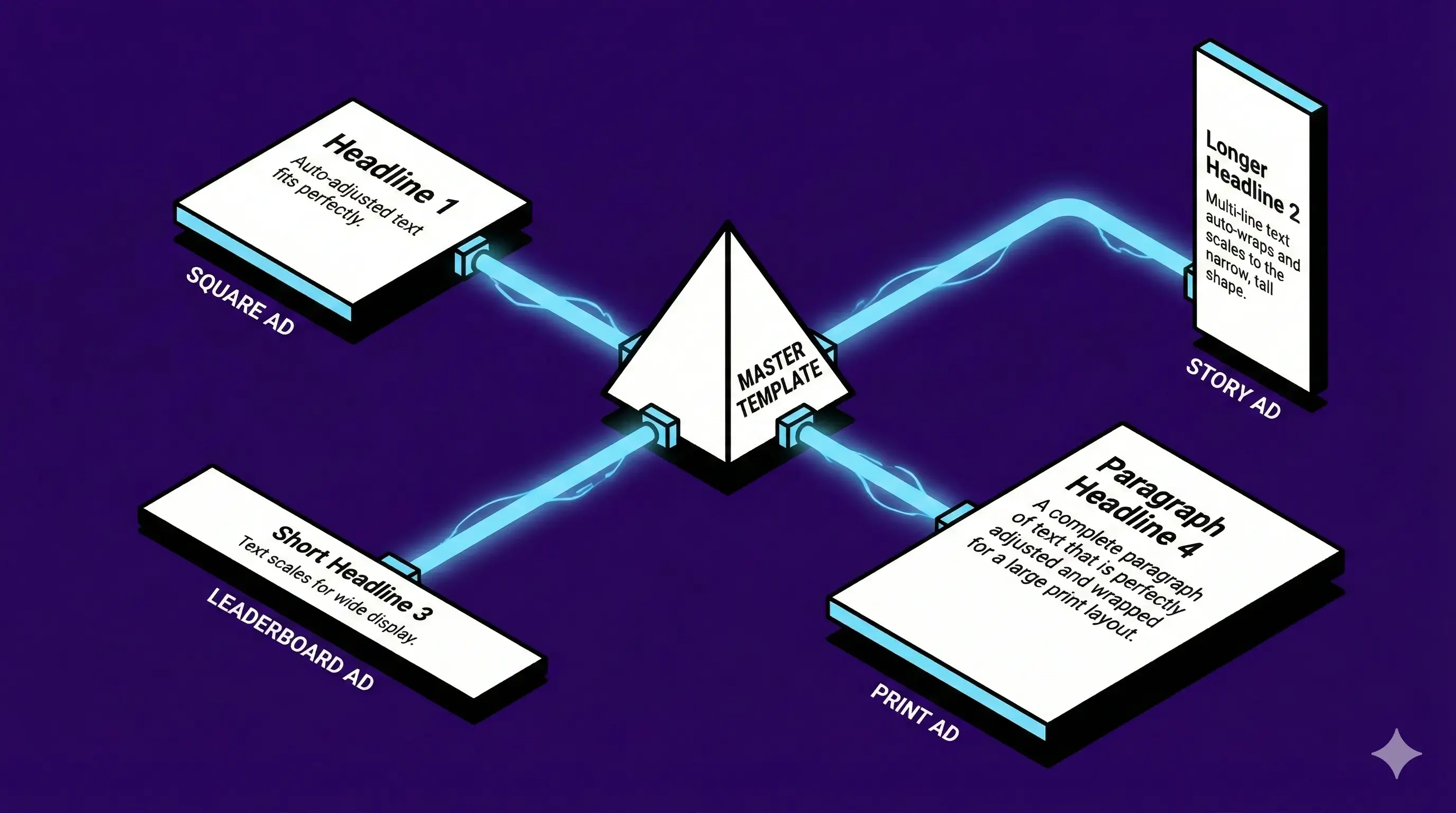
Logic-first creative automation engine by Abyssale
Furthermore, the architecture of the automation engine affects the cost of manual QA. Logic-first systems rely on constraint-based rules to adapt layouts automatically. Platforms built around this approach, such as Abyssale, are cited by agencies for significantly reducing the necessity for human checks.
By ensuring elements adapt automatically to content changes (such as varying text lengths in localized ads), these systems prevent the most common layout errors, allowing creative teams to reallocate hours from repetitive QA to higher-value strategy.
A significant barrier to technology adoption in agencies is the "commitment cliff" the high upfront cost and training required for complex systems.
Observations from 2026 suggest that firms are increasingly opting for platforms that allow them to start with specific, low-complexity use cases such as automating Open Graph images or social media posts, and then scale as their operational needs evolve.
Many agencies begin with simple use cases such as resizing or localization before expanding automation across formats and teams.
Is Celtra always the right choice for agencies?
Celtra remains a standard for global brands requiring deep DCO and media-rich display features. However, its economic model and complexity may be more than is required for agencies primarily focused on high-speed, cross-channel production efficiency.
How do agencies evaluate ROI between platforms?
Firms typically measure ROI through a combination of "Time-to-Market" and "Reduction in Cost Per Asset." Agencies often compare whether a platform’s cost is tied to production volume (generations) or campaign reach (impressions) to determine the best fit for their client billing models.
When do agencies choose Abyssale?
Agencies commonly choose Abyssale when they require a versatile, usage-based infrastructure that handles more than just display.
Specifically for firms needing a unified system for social, video, print, and dynamic image generation.
In 2026, there is no universal "best tool" in the creative automation landscape. The optimal choice depends on an agency's specific economic and operational constraints.
Platforms focused on media optimization and DCO serve a vital role for global display campaigns, while production-centric platforms like Abyssale provide a rational, predictable choice for teams seeking to scale their creative output across multiple channels.
Ultimately, the right decision for a COO or CFO is the platform that aligns most closely with their agency’s model for cost predictability and long-term production scale.
Explore our guides and tutorials to unlock the full potential of Abyssale's spreadsheet feature for scaled content production.