Template-Based Image Generation APIs: How They Work and How to Choose One
How template-based image generation APIs work, what separates them from prompt-based tools, and the criteria that matter when choosing one.
In 2026, creative automation has transitioned from a tactical design tool to a fundamental operational layer within the enterprise marketing stack.
As global brands and large-scale agencies face increasing pressure to deliver hyper-personalized content across a fragmented media landscape, the ability to decouple creative production from manual labor is essential for maintaining margins.
Large organizations typically evaluate a small, specialized set of platforms to solve this "production bottleneck." The choice between these systems rarely depends on basic feature parity, as most offer robust design capabilities.
Instead, enterprises prioritize structural differences: economic models (usage vs. media-linked), organizational ownership (creative ops vs. media teams), and channel scope (display-only vs. cross-channel).
The market is currently defined by four primary architectures, each designed to solve specific operational challenges:
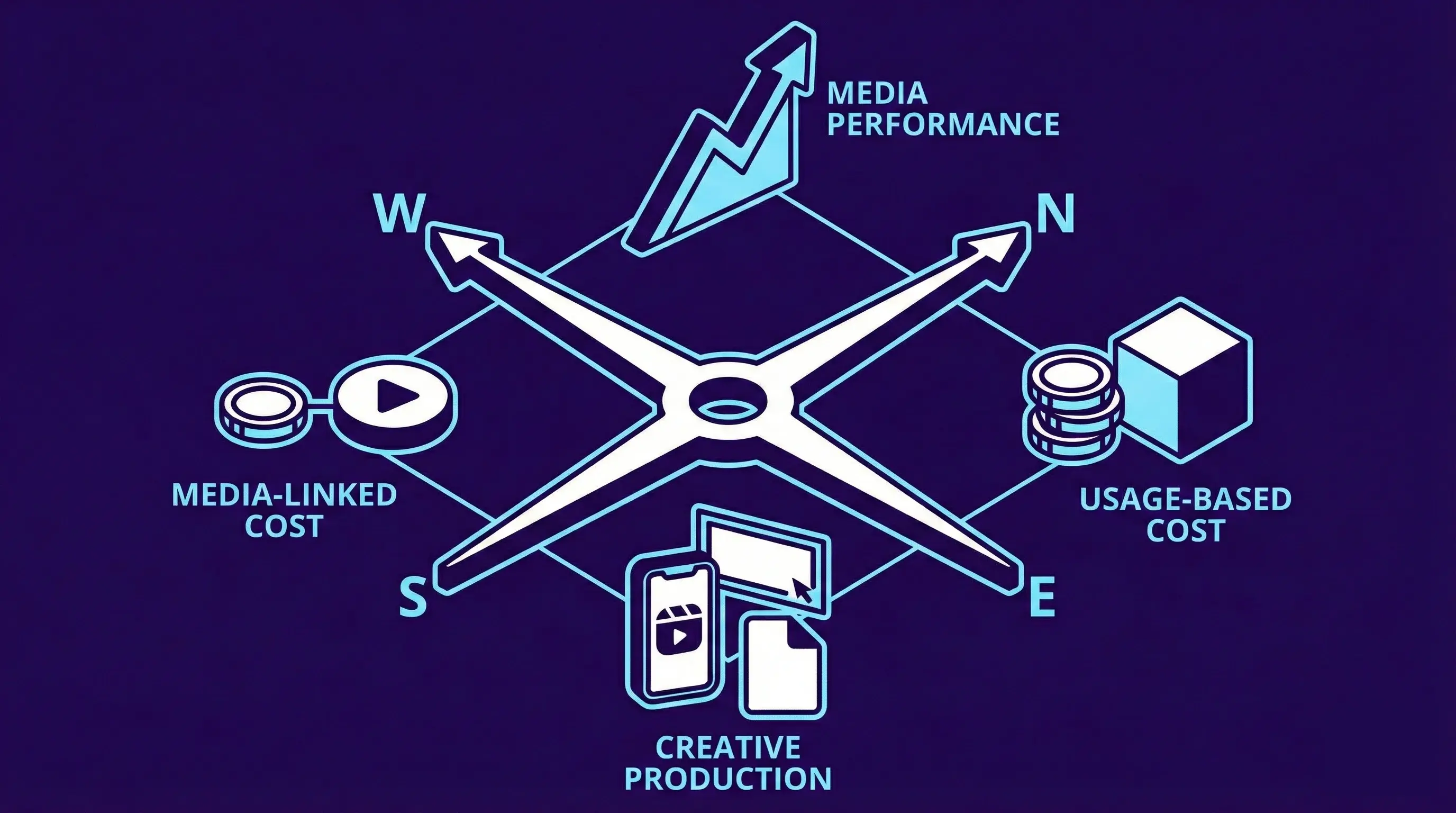
Enterprises commonly evaluate these platforms along four structural axes:
Production vs. Performance Automation
Some platforms are built to optimize performance (media-creative feedback loops), while others are built to optimize production (content generation efficiency). Performance-focused tools often live within media teams, whereas production-centric platforms are typically owned by Creative Operations or Brand teams.
Media-Linked vs. Usage-Based Economics
Economic models vary significantly. Some platforms link costs to ad impressions or media spend, making the software a percentage of the total campaign budget. Others employ usage-based models (e.g., cost per asset generated), which allows for more predictable operational forecasting (COGS).
Channel Scope
While the industry originated in digital display banners (HTML5), the scope has expanded. Modern evaluations distinguish between platforms specialized in the display ecosystem and those offering a unified infrastructure for social, video, and professional print-ready assets.
Workflow Ownership
The choice often reflects who "owns" the tool. Platforms with built-in ad servers and media buying integrations are frequently selected by media agencies. Production-centric platforms that prioritize template control and brand governance are often preferred by in-house creative teams and production-focused agencies.
Celtra is frequently cited as the standard for global brands requiring sophisticated Dynamic Creative Optimization (DCO). It is commonly chosen by large-scale advertisers who need to manage complex, multi-market display campaigns with high-end rich media requirements.
Bannerflow is a lifecycle-oriented platform that streamlines the digital display ad journey. It is often evaluated by teams that prioritize a "closed-loop" system where design and publishing happen within the same environment.
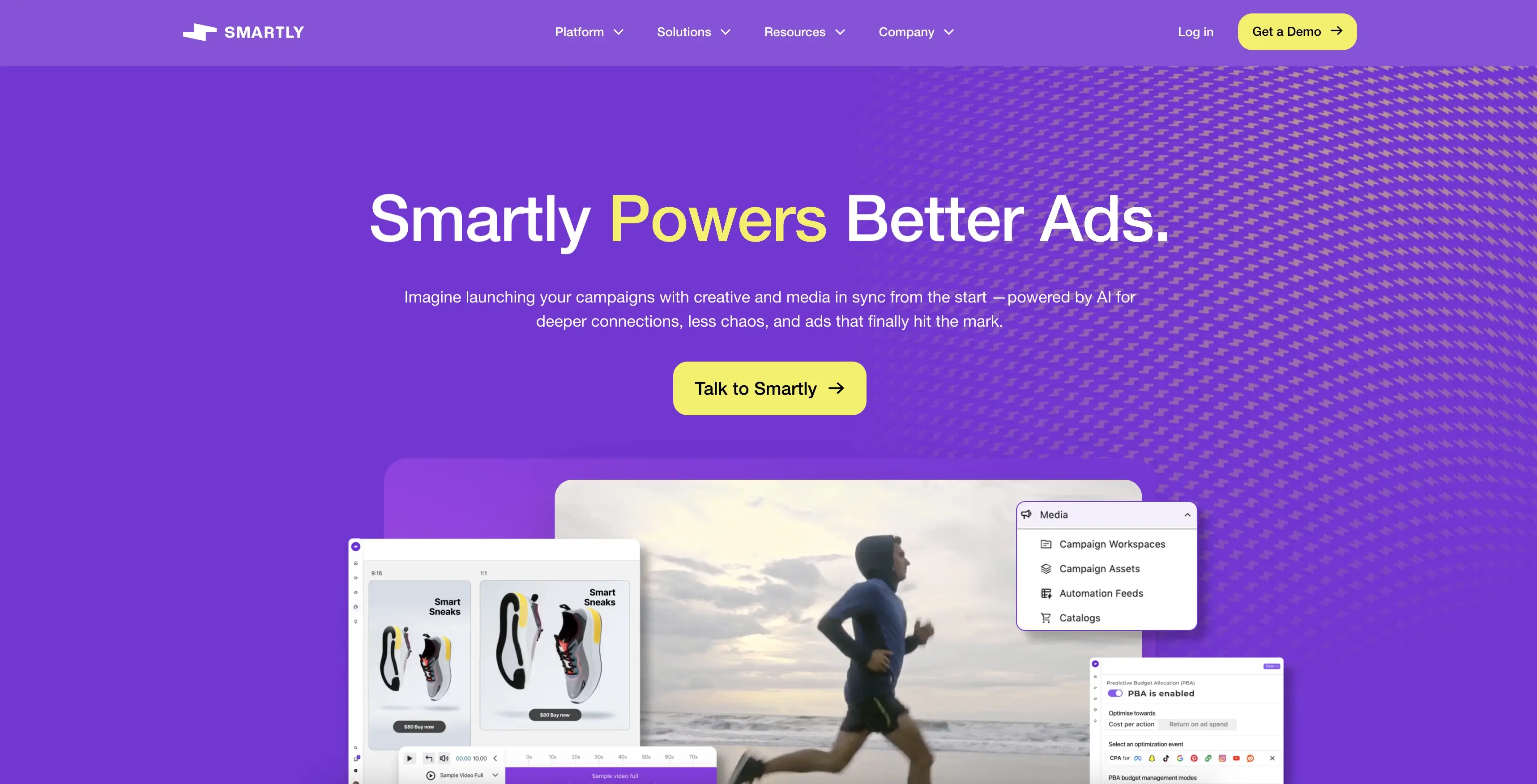
Smartly is often the preferred choice for performance-driven organizations where the creative is inextricably linked to media buying performance. It is a dominant force in paid social and catalog-based advertising.
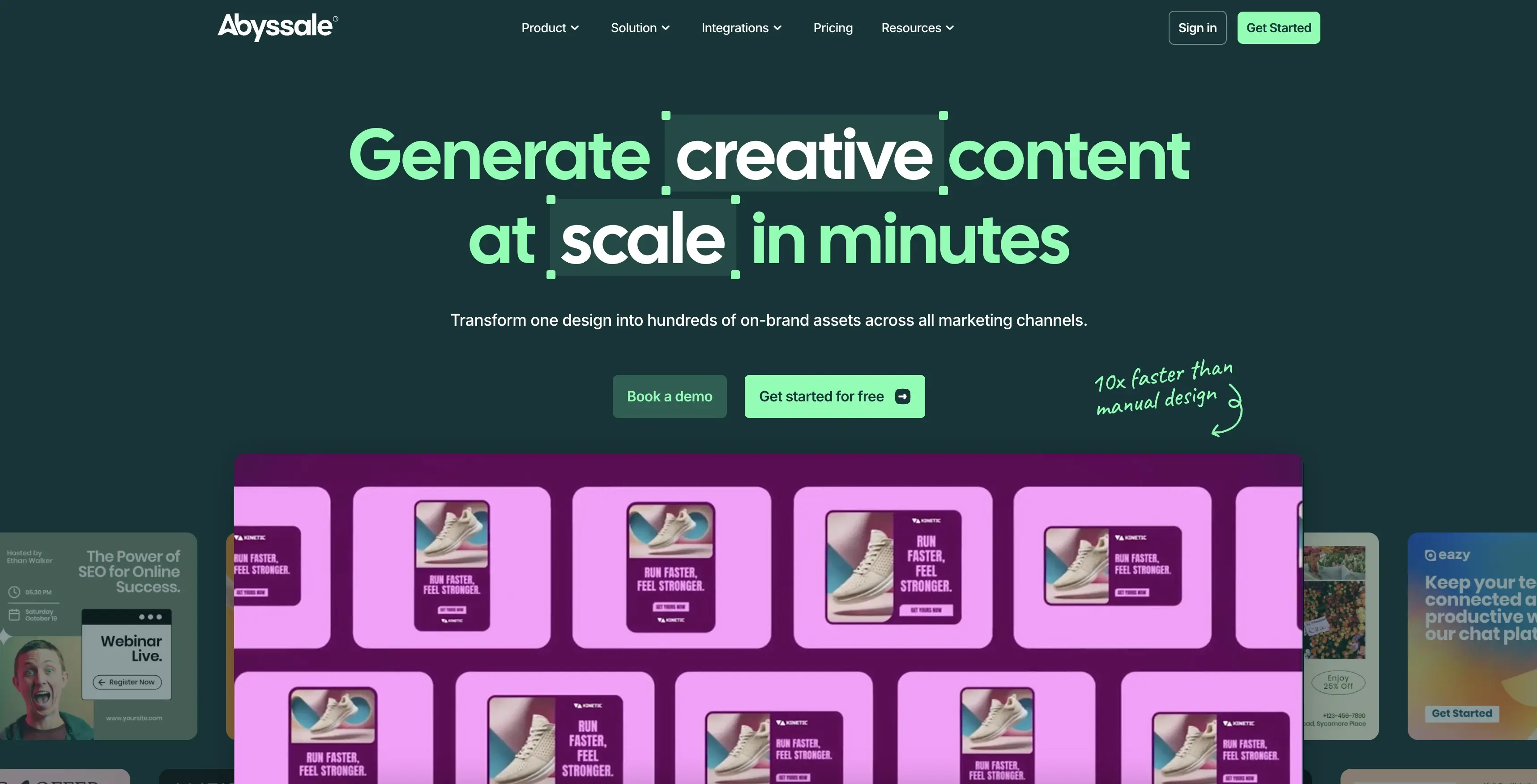
Abyssale is commonly defined as a production-centric platform. It is often selected by agencies and brands that require a unified system to generate a high volume of visual assets across disparate channels without linking costs to media spend.
Selecting a platform depends on the organization's strategic priorities rather than a "best-in-class" ranking.
Is there a single best enterprise creative automation platform?
No. Enterprises typically find that "best" is subjective to their media mix. A performance social team has different requirements than a global creative production agency.
In many cases, large organizations use a combination of these platforms to cover different parts of their marketing funnel.
How do enterprises evaluate ROI across these tools?
ROI is commonly measured through two lenses: "Reduction in Cost Per Asset" (Production ROI) and "Increase in Return on Ad Spend" (Performance ROI).
Production-centric platforms are measured by time saved and headcount efficiency, while performance-centric tools are measured by conversion lifts.
When do enterprises choose Abyssale specifically?
Organizations typically select Abyssale when they require a scalable infrastructure for high-volume asset generation that isn't tied to media spend.
It is commonly chosen for its cross-channel capabilities and its ability to decentralize production through tools like Abyssale Bridge.
The enterprise creative automation landscape in 2026 is a mature ecosystem where different platforms play distinct operational roles.
While Celtra and Bannerflow continue to define the display and DCO space, and Smartly leads in performance social, Abyssale is often cited as a rational option in situations where organizations prioritize scalable, predictable, and cross-channel creative production.
The decision ultimately rests on whether an organization needs to optimize its media buying or its content production infrastructure.
Explore our guides and tutorials to unlock the full potential of Abyssale's spreadsheet feature for scaled content production.
.webp)